Out of the box, collectorforopenshift writes everything to the default index of your HTTP Event Collector token. Each token has an allow-list of indexes it can write to, and one of those is treated as the default when the sender doesn’t pick one. The Monitoring OpenShift app, in turn, assumes those indexes are searchable by default for your Splunk role - main is the obvious example.
If you forward to an index that isn’t searchable by default for your role, the dashboards will come up empty even though the data is being indexed.
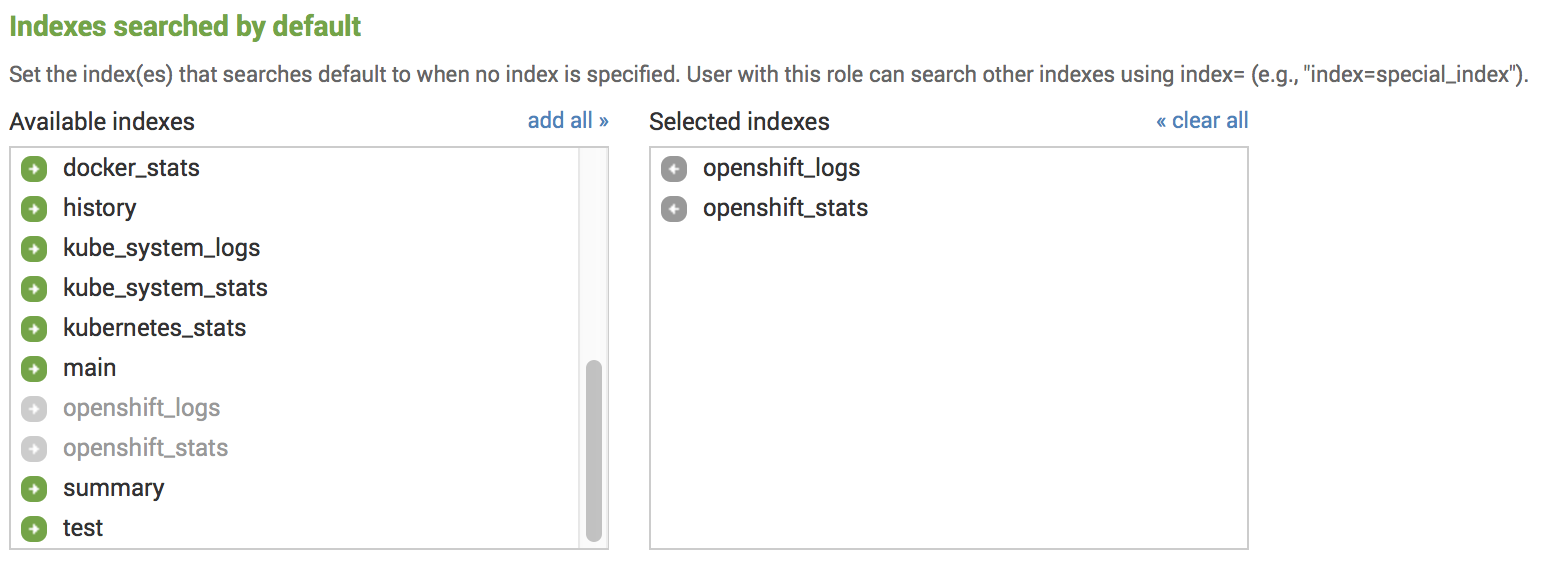
You have two ways to fix that. The first is to add the index to Indexes searched by default for your role under Settings - Access Control - Roles:
The second is to update the search macros the app uses, so the dashboards search your indexes explicitly. You’ll find them in the Splunk Web UI under Settings - Advanced search - Search macros, or you can override $SPLUNK_HOME/etc/apps/monitoringopenshift/default/macros.conf with a local/macros.conf:
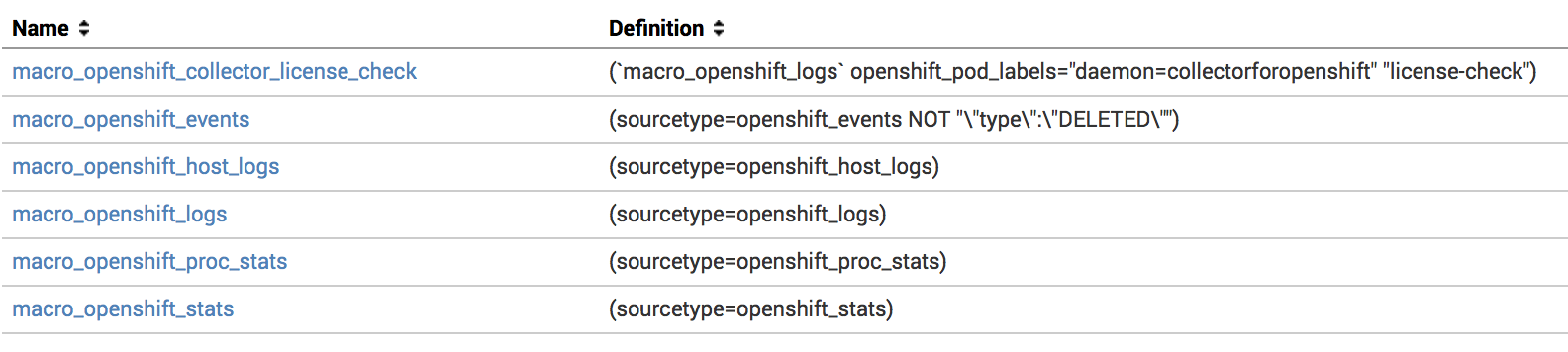
Since version 5.10, every other macro inherits from a single base macro macro_openshift_base - so you typically only need to set the index list once:
1macro_openshift_base = (index=openshift_stats OR index=openshift_logs)If you want finer-grained control - for example, pinning a specific datatype to a specific index and sourcetype - override the individual macro instead:
1macro_openshift_stats = (index=openshift_stats sourcetype=openshift_stats)The macros worth knowing about:
macro_openshift_events- all the OpenShift events.macro_openshift_host_logs- host logs.macro_openshift_logs- container logs.macro_openshift_proc_stats- proc metrics.macro_openshift_net_stats- network metrics.macro_openshift_net_socket_table- network socket tables.macro_openshift_mount_stats- container runtime storage usage metrics.macro_openshift_stats- system and container metrics.macro_openshift_prometheus_metrics- metrics from prometheus format
Using dedicated indexes for different types of data
For most clusters, it’s worth splitting logs from metrics - they have different access patterns, different volumes, and different retention needs. A common layout is openshift_logs for events, container logs, and host logs; openshift_stats for proc and system metrics; and openshift_prometheus for Prometheus metrics. You can go further and pin every datatype Collectord forwards to its own index if you want.
The big practical win: dedicated indexes let you set different retention policies for logs and metrics independently.
To wire it up on the Collectord side, uncomment the highlighted index lines in the Configuration Reference and set them to the indexes you want:
 1data:
 2  collector.conf: |
 3    ...
 4
 5    [input.system_stats]
 6
 7    ...
 8
 9    # specify Splunk index
10    index =
11
12    ...
13
14    [input.proc_stats]
15
16    ...
17
18    # specify Splunk index
19    index =
20
21    ...
22
23    [input.net_stats]
24
25    ...
26
27    # specify Splunk index
28    index =
29
30    ...
31
32    [input.net_socket_table]
33
34    ...
35
36    # specify Splunk index
37    index =
38
39    ...
40
41    [input.mount_stats]
42
43    ...
44
45    # specify Splunk index
46    index =
47
48    ...
49
50    [input.files]
51
52    ...
53
54    # specify Splunk index
55    index =
56
57    ...
58
59    [input.files::syslog]
60
61    ...
62
63    # specify Splunk index
64    index =
65
66    ...
67
68    [input.files::logs]
69
70    ...
71
72    # specify Splunk index
73    index =
74
75    ...
76
77    [input.kubernetes_events]
78
79    ...
80
81    # specify Splunk index
82    index =
83
84    ...
Configuring dedicated indexes, source and sourcetype for Projects
You can also override the destination index - and source/sourcetype - per project, workload, or pod through annotations Collectord watches for. For example, to send every container log, metric, and event from the project1 project to the openshift_project1 index:
1oc annotate namespaces project1 \
2  collectord.io/index=openshift_project1
For the full set of routing and override annotations, see Annotations.