Blog
Monitoring Docker, OpenShift and Kubernetes - Version 5.16
The major feature of this release is self-monitoring of Collectord. With the metrics published to Splunk from Collectord, you can easily monitor the performance of the logging pipeline and Splunk HEC input. We have included many small bug fixes and usability improvements in this release as well.
Collectord Metrics
Collectord publishes metrics for connections to Splunk, how long the requests take, how large the lag is for the events sent in every batch and many more. Now you can easily find if your Splunk HEC is not performant enough for accepting the number of logs sent from your clusters.
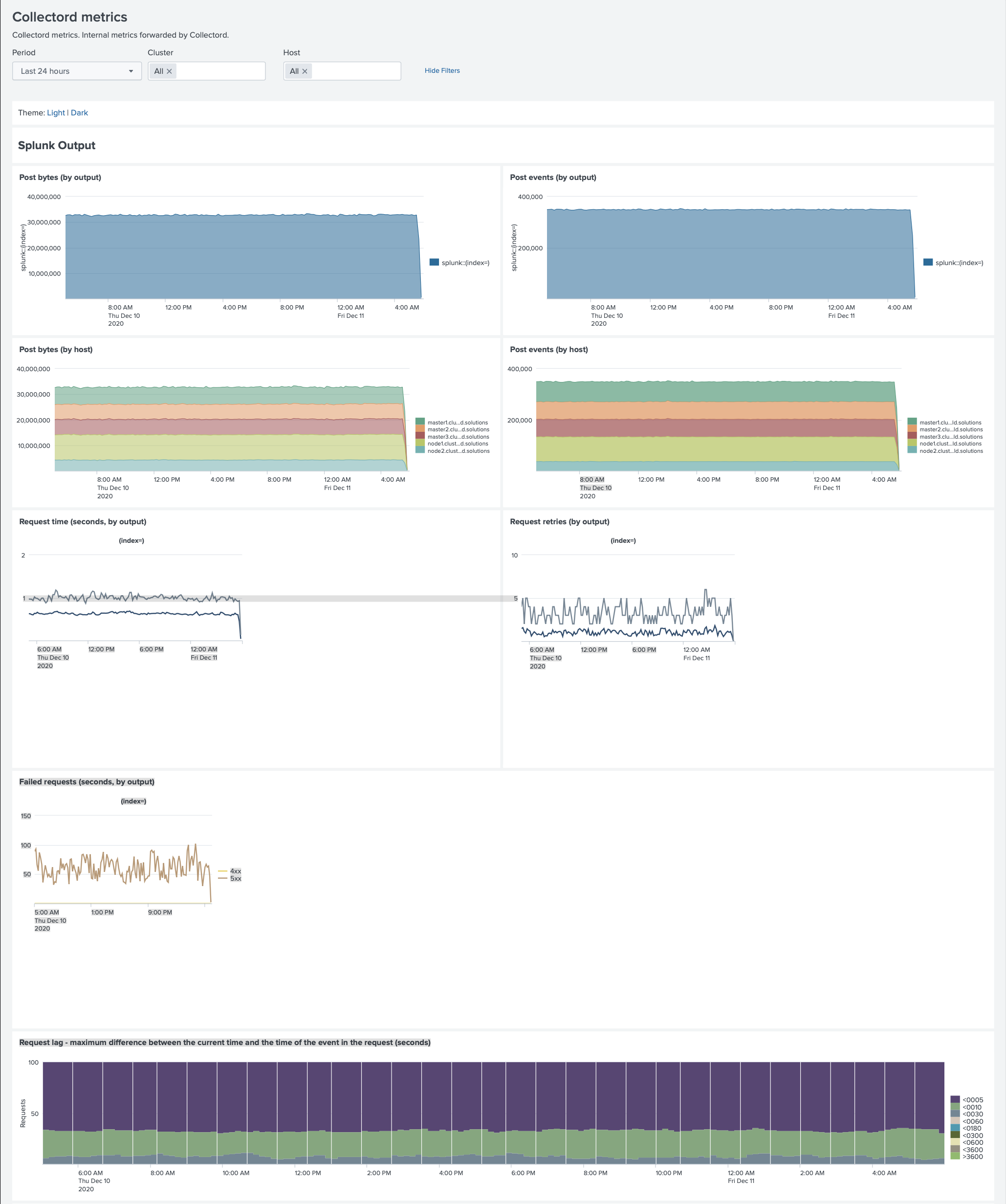
To see data on this dashboard, make sure to update your configuration for OpenShift and Kubernetes and include input
input.collectord_metrics.
These metrics can also be exported in Prometheus format. For that, you need to enable httpServerBinding under [general]
and metrics will be available under the path /metrics/prometheus.
More annotations for Prometheus inputs
With annotations for Prometheus metrics collection you can configure the caname of the certificate and include various Authorization headers.
New configurations
You can filter host file (input.files and input.journald) logs. Include the blacklist and whitelist patterns
to reduce the number of logs from chatty hosts.
1# Blacklisting and whitelisting the logs
2# whitelist = ^regexp$
3# blacklist = ^regexp$
Links
You can find more information about other minor updates by following the links below.
Release notes
- Monitoring OpenShift - Release notes
- Monitoring Kubernetes - Release notes
- Monitoring Docker - Release notes